
Integriser: an e-commerce platform rebuilt on AWS
Mysterious Code rebuilt Integriser's e-commerce platform on AWS Fargate, supporting four times the traffic at comparable cost while halving the number of container types to manage.

We rely on Mysterious Code to keep our AWS platform running: reliably and securely, even as traffic grows. Direct contact with an experienced engineer, with no middlemen and no unnecessary formality, makes a huge difference.
Integriser is a Polish SaaS company whose order management platform serves fulfilment warehouses and their e-commerce customers. The product was growing fast, and the infrastructure underneath it was not built for where the business was heading.
The challenge
The platform ran in Docker containers on a single virtual machine in Google Cloud, orchestrated with Docker Swarm. That setup had carried the company a long way, but it had a ceiling. The containers could not scale with traffic and load. Routing was path-based and fiddly, which made the container configuration more complex than it needed to be. The PostgreSQL database struggled to keep up with the application’s demands. And with no repeatable testing process or reliable deployment procedure, shipping changes was slower and riskier than the team could afford.
For an order management platform, the worst place to hit a scaling ceiling is exactly where e-commerce traffic peaks: Black Friday and the run-up to Christmas.
What we built
Integriser chose AWS, and we rebuilt the platform around managed services that scale on their own. The database moved to Amazon Aurora (PostgreSQL-compatible), which scales storage and I/O automatically with the workload and gives the team performance insight without the database administration.
Amazon CloudFront and an Application Load Balancer replaced the complex path-based routing, which simplified the container configuration considerably. The containers themselves moved to AWS Fargate, where each component of the application scales independently. Background workers run on Fargate Spot, so the growing data-processing load is handled at a fraction of the on-demand price.
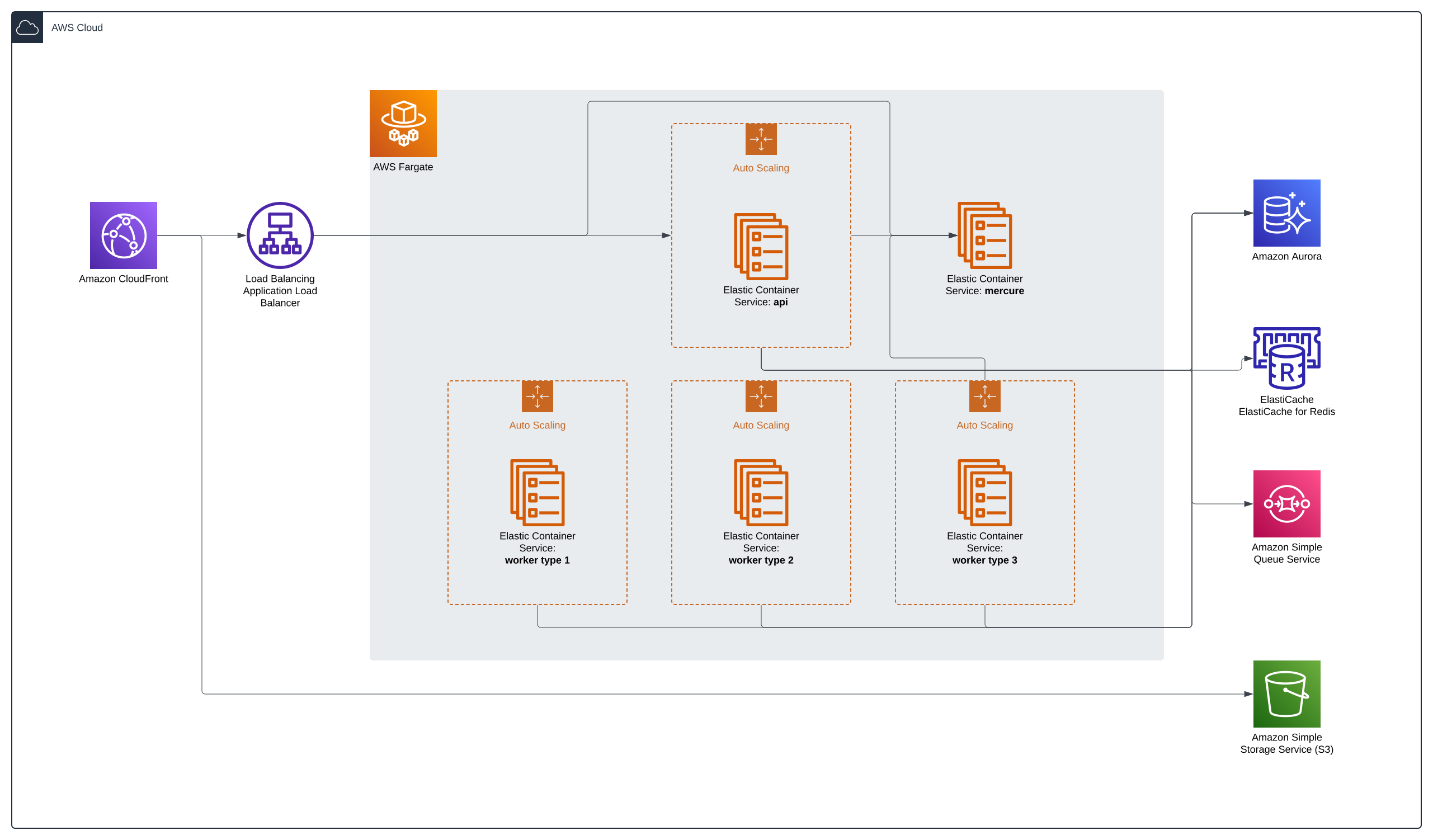
Along the way we simplified how the containers themselves are built, and set up a reliable, repeatable testing and deployment process on GitLab Pipelines, so developers get fast feedback on changes and ship quickly.
Everything deploys through AWS CloudFormation as ECS services on Fargate. Because the infrastructure is code, adding a pre-production staging environment was straightforward, and every deployment is reproducible and predictable.
The results
The platform now handles four times the traffic it previously could, at a comparable cost, thanks to right-sized resources and Fargate Spot. The demand spikes that trouble many e-commerce platforms, Black Friday and Christmas among them, are absorbed without drama. And day-to-day development is simpler than before: half the container types to manage, a staging environment to test in, and a deployment process the team can rely on.
Let's talk
Start with a free second opinion: 30 minutes with our founder, who has held AWS Professional certifications since 2016. No account access needed, and you keep a short written note of what we covered.


