Typical CI deployment pipeline - overview
More details on each deployment phase with examples, will be posted at our blog over the coming weeks, so check back soon.

A walk-through of a typical CI/CD deployment pipeline - from tests to build to release - read in order.
More details on each deployment phase with examples, will be posted at our blog over the coming weeks, so check back soon.
Welcome to the first part of my series on deployment pipelines. If you missed the intro, check out the video where I describe a typical pipeline here.
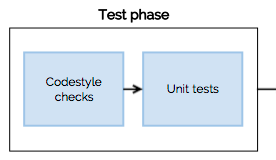
First step of a deployment pipeline, is usually a series of tests. After a commit is made, the code is checked out from the source code repository and tested. Those are usually code style tests and unit tests.
Welcome to the second part of my series on deployment pipelines. If you missed the intro, check out the video where I describe a typical pipeline here. The other parts of this series are part 1: test phase and part 3: deployment onto an environment.
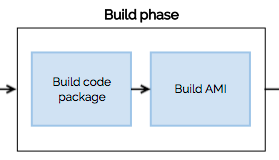
After the test phase of the pipeline, once the quality of the code has been checked, we must build a deployable artefact for this version (commit) of the code. In case of AWS, this would be an AMI (Amazon Machine Image), which can then be deployed as a new instance in our environment.
The purpose of every deployment pipeline is… a deployment. So this final part of the series, will focus on just that. If you missed the intro, check out the video where I describe a typical pipeline here. The other parts of this series are part 1: test phase and part 2: build phase.
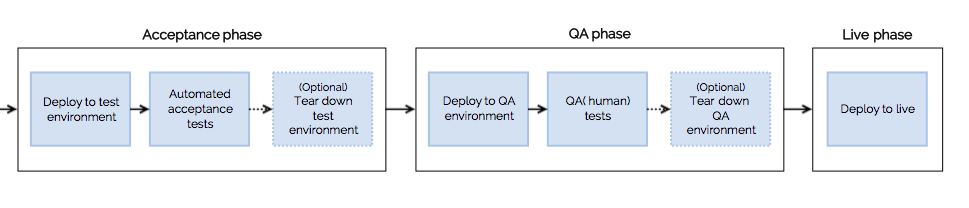
Once we create an AMI that we’d like to deploy, performing a rolling update on existing instances is fairly easy. Usage of Auto scaling groups and CloudFormation makes it even easier - since AWS Auto scaling groups support the rolling updates out of the box.
Or, if your applications requires blue-green deployments, using CloudFormation is almost essential.
Start with a free second opinion: 30 minutes with our founder, who has held AWS Professional certifications since 2016. No account access needed, and you keep a short written note of what we covered.


